Vietnam strengthens cooperation with Europe: what is noteworthy?
 By BBC News Tiếng Việt
Original article in Vietnamese ↗
European countries are stepping up economic relations with Vietnam through trade agreements, yet a diplomatic problem exists between the parties.
European countries come to Hanoi: Norway says it will demand a resolution to the arrest of Viet Tan members
Published 15 October 2026
Reading time: 5 minutes
European countries are stepping up economic relations with Vietnam along two parallel tracks.
While the European Free Trade Association (EFTA) will sign a free trade agreement with Vietnam, the European Union (EU) is strengthening cooperation on strategic minerals in order to reduce dependence on China.
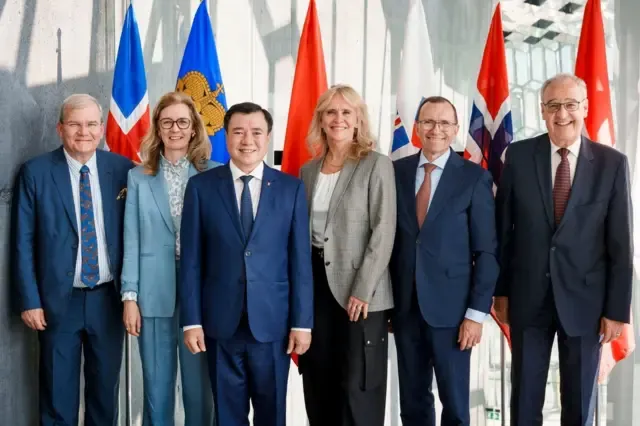
According to European and Vietnamese officials speaking to the news agency Reuters, Vietnam and EFTA, which comprises Switzerland, Norway, Iceland and Liechtenstein, will sign a free trade agreement (FTA) in Hanoi on 18 October, in the presence of Economy Minister and 2026 rotating President of Switzerland Guy Parmelin.
Mr. Parmelin is on a trip to Asia.
Around the same time, the Prime Minister of the Principality of Liechtenstein, Ms. Brigitte Haas, will make an official visit to Vietnam from 17 to 19 October.
The move between Vietnam and EFTA concludes negotiations that had dragged on since 2012 and were only revived last year amid global trade tensions and US tariff measures.
The agreement is expected to expand market access between the two sides, covering areas such as rules of origin, investment, intellectual property rights, competition, trade remedies and public procurement.
However, a diplomatic problem is casting a shadow over the signing.
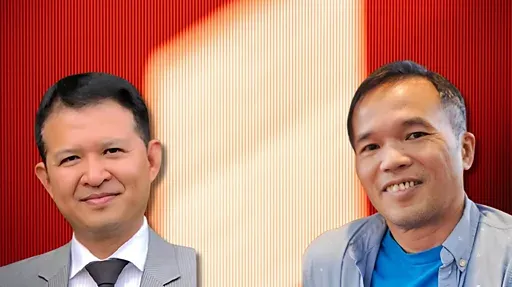
Last month, Vietnam announced the arrest of Norwegian citizen Nguyễn Đức Thuận, Australian citizen Hồ Phạm Hiệp Huy and Vietnamese citizen Thái Công Trường Sơn on charges of illegal entry and forgery of documents.
The Ministry of Public Security said the three were arrested while trying to illegally cross the border from Cambodia into Vietnam and are members of the Viet Tan Party, a political organisation that Hanoi has listed as a terrorist group.
Meanwhile, Viet Tan and many international human rights organisations say the three were abducted in Cambodia before appearing in Vietnam.
Human Rights Watch and dozens of other human rights organisations have called for the release of those detained.
Reuters quoted the Norwegian Ministry of Foreign Affairs as saying that State Secretary Astrid Bergmål will raise the case of the Norwegian citizen with Vietnamese officials during the visit to Hanoi.
"This case is causing concern in Norwegian public opinion. We hope this case can be resolved without unnecessary delay," the Norwegian Ministry of Foreign Affairs stated.
On the other side, Reuters reported that General Secretary and President Tô Lâm is expected to hold meetings with EU leaders on 22 October in Brussels, Belgium's capital, although the programme has not been officially announced.
The EU is reportedly preparing specific items for the two sides to sign during Mr. Tô Lâm's visit.
The trip takes place right after the European Council summit, where EU leaders are expected to discuss measures to reduce dependence on goods and raw materials from China.
Strategic minerals are said to be one of the prominent topics in exchanges between the EU and Vietnam, and the European side is seeking to secure long-term access to Vietnam's important mineral resources, including rare earths, tungsten, antimony, bismuth and bauxite.
Vietnam is currently one of the few countries with significant reserves of minerals considered essential to the defence, high-technology and energy transition sectors. Among them, tungsten and antimony are two commodities that the EU has imported from Vietnam for many years.
Documents seen by Reuters show a proposal for the EU to increase support for Vietnam's mining and mineral processing sector through concessional loans, grants, technical assistance and export credit insurance, in order to maintain and even expand the supply of minerals to Europe.
According to the EU's assessment, strengthening its presence in Vietnam is necessary to create an alternative supply source to China, after Beijing's export restrictions in recent years disrupted industrial supply chains in Europe.
Recently, Vietnam's Ministry of Industry and Trade proposed a list of 17 minerals permitted for export, including rare earths, which is being appraised by the Ministry of Justice.
The draft says rare earths are permitted for export if they have undergone deep processing into one of the following products: separated oxides, metals, alloys, alloy powder or permanent rare earth magnets.
The revised 2025 Law on Geology and Minerals stipulates that rare earths belong to the group of special strategic minerals, which play an important role in the country's economy, national defence and security.
This move, according to the EU, reflects Vietnam's positive progress in meeting international standards on tax transparency and governance.
However, Vietnam remains in the group of countries under monitoring and will have to undergo a re-evaluation before being confirmed as fully meeting international standards on tax transparency.